
Australia Travel Safety Guide
What are the emergency numbers in Australia?
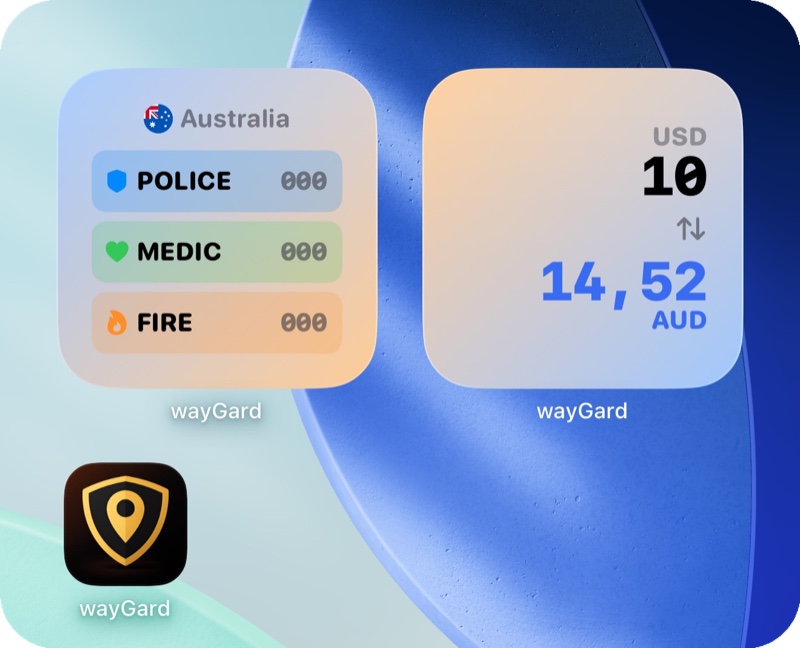
Australia emergency numbers: 000 (Police), 000 (Ambulance), 000 (Fire Department).

Is Australia safe for travelers?
General urban safety is good, but swimming and outdoor risks are the bigger issue. Follow surf flags and local warnings because rip currents kill visitors every year.
Tap water is generally safe in normal urban areas.
Terrorist attacks are considered likely, and one at Bondi Beach in December 2025 killed 15 people. Stay alert in crowded places and follow police instructions.
In the tropical north, never swim where crocodile warnings are posted, and in stinger season (about November to May) swim only inside stinger nets or wear a full-body stinger suit.
What health risks should travelers know about in Australia?
Bushfires, extreme heat, and strong UV exposure are the main practical risks. Sun protection matters more than many travelers expect.
In northern tropical areas, mosquitoes and seasonal flooding matter more than they do in Sydney or Melbourne.
What laws should tourists know about in Australia?
Nicotine vapes are sold only in pharmacies, and you may bring in no more than 2 vapes, 20 accessories and 200 mL of liquid. Smoking is banned in all enclosed public spaces, and other smoking and vaping rules vary by state.
Carry photo ID if you plan to drink, go out, or buy age-restricted items.
How is transportation in Australia?
Public transport is the normal and safe default in major cities. Exact cash is often not the best option because local transit systems use city cards or contactless bank cards.
Uber and DiDi both operate in Australia and are a practical default where public transport is weak.
What should travelers know about money in Australia?
Currency is Australian dollar (AUD). Cards and contactless payments work almost everywhere, and some places are card-only.
ATM or exchange scams are not the main issue. The bigger risk is assuming cash is needed everywhere when it often is not.
Tipping is not required. Small tips happen for standout service, but there is no need to add large US-style tips.
What practical info do travelers need for Australia?
Plug type is I and supply is 230V.
The country is huge. Domestic flights are often the realistic option between cities rather than train travel.
What are the entry requirements for Australia?
Everyone except New Zealand citizens must arrange a visa (ETA, eVisitor or visitor visa) before flying. Declare all food, plant and animal products on arrival, or risk heavy fines or losing your visa.
Which embassies are in Australia?
Mostly in Canberra, Melbourne, Sydney.
 Afghanistan
 Albania
 Algeria
 Argentina
 Austria
 Azerbaijan
 Bangladesh
 Belgium
 Bosnia and Herzegovina
 Botswana
 Brazil
 Brunei
 Bulgaria
 Cambodia
 Canada
 Chile
 China
 Colombia
 Costa Rica
 Côte d’Ivoire
 Croatia
 Cuba
 Cyprus
 Czechia
 Denmark
 Ecuador
 Egypt
 El Salvador
 Estonia
 Ethiopia
 Fiji
 Finland
 France
 Georgia
 Germany
 Ghana
 Greece
 Guatemala
 Holy See (Vatican City)
 Hungary
 India
 Indonesia
 Iran
 Iraq
 Ireland
 Israel
 Italy
 Japan
 Jordan
 Kenya
 Kosovo
 Kuwait
 Laos
 Lebanon
 Libya
 Lithuania
 Malaysia
 Malta
 Mauritius
 Mexico
 Mongolia
 Morocco
 Myanmar
 Nauru
 Nepal
 Netherlands
 New Zealand
 Nigeria
 North Macedonia
 Norway
 Pakistan
 Palestine
 Panama
 Papua New Guinea
 Paraguay
 Peru
 Philippines
 Poland
 Portugal
 Qatar
 Romania
 Russia
 Samoa
 Saudi Arabia
 Serbia
 Singapore
 Slovakia
 Slovenia
 Solomon Islands
 South Africa
 South Korea
 Spain
 Sri Lanka
 Sudan
 Sweden
 Switzerland
 Taiwan
 Thailand
 Timor-Leste
 Tonga
 Turkey
 Uganda
 Ukraine
 United Arab Emirates
 United Kingdom
 United States
 Uruguay
 Vanuatu
 Venezuela
 Vietnam
 Zambia
 Zimbabwe
Traveling Nearby?
Related Articles

Frequently Asked Questions
What is the emergency number in Australia?
In Australia, you can reach police at 000, ambulance at 000. These numbers work from any phone, including mobile phones without a local SIM card.
Is Australia safe for tourists?
General urban safety is good, but swimming and outdoor risks are the bigger issue. Follow surf flags and local warnings because rip currents kill visitors every year.
What currency is used in Australia?
Currency is Australian dollar (AUD). Cards and contactless payments work almost everywhere, and some places are card-only.
What health precautions should I take in Australia?
Bushfires, extreme heat, and strong UV exposure are the main practical risks. Sun protection matters more than many travelers expect.
What laws should tourists know about in Australia?
Nicotine vapes are sold only in pharmacies, and you may bring in no more than 2 vapes, 20 accessories and 200 mL of liquid.
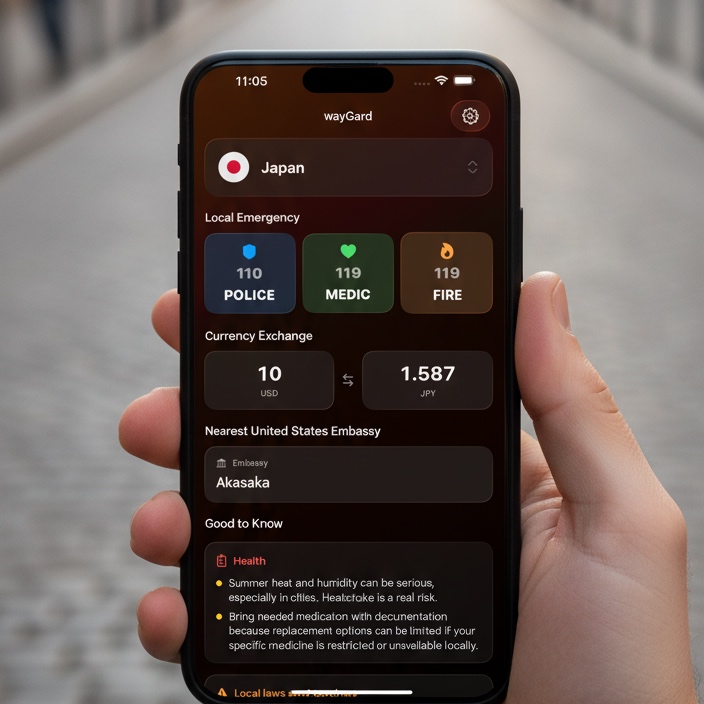
Get wayGard for iOS
Get all of Australia's safety info offline.
